Basse-Yutz Flagons
Files
Dublin Core
Title:
Basse-Yutz Flagons
Description:
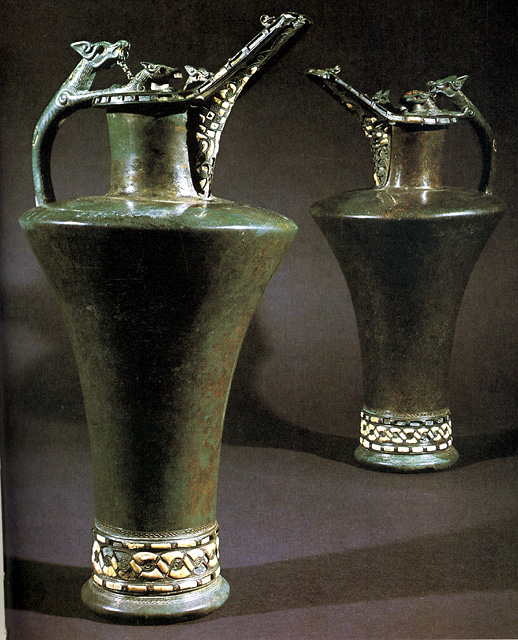
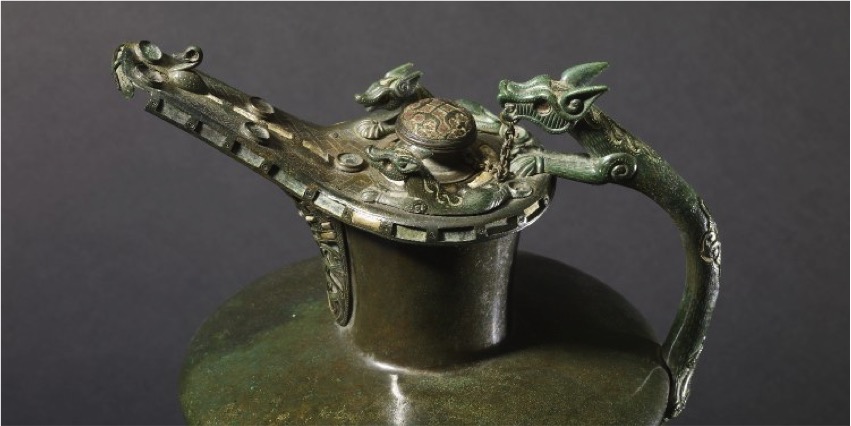
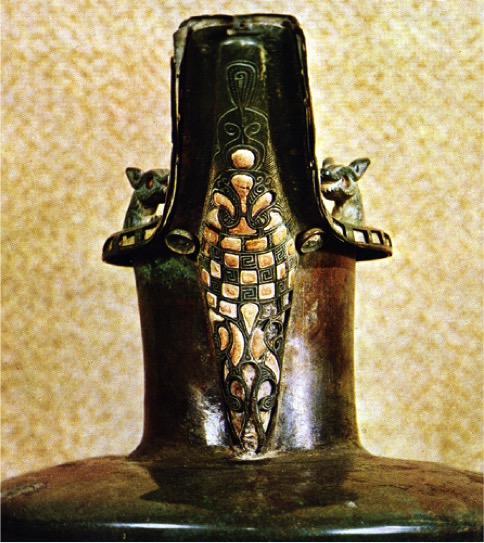
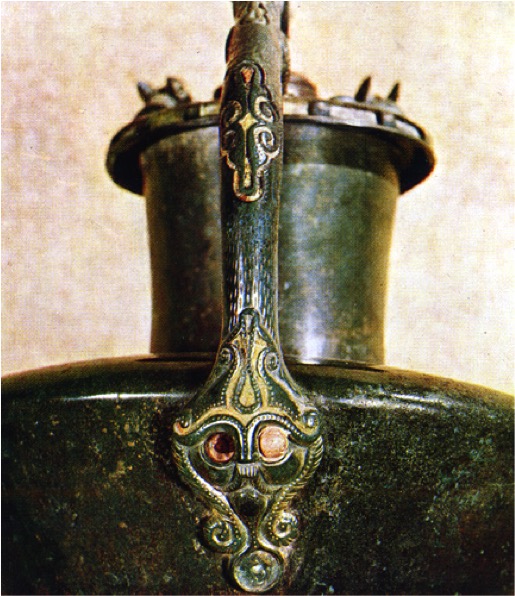
The Basse-Yutz Flagons are a pair of ceremonial drinking vessels. These flagons would have been used to pour beer, wine, or mead at feasts. According to the British Museum, where the flagons currently reside, the flagons are made out of a single sheet of bronze metal. Resin was used to coat the inside of the flagons making them completely watertight. Attached to each flagon are a cast spout and lid made from a bronze sheet and attached to the flagon with pins. Decorating the flagons are inlays of opaque red glass enamel from Asia Minor and precious coral from the Mediterranean coast.
The two flagons are called the Basse-Yutz flagons because they were found in the town of Basse-Yutz, Moselle in eastern France. In 1927, they were discovered in the grave of an important Celtic dignitary during the course of a railway construction. However those that dug in the grave did so illicitly and without the help of trained archaeologists.
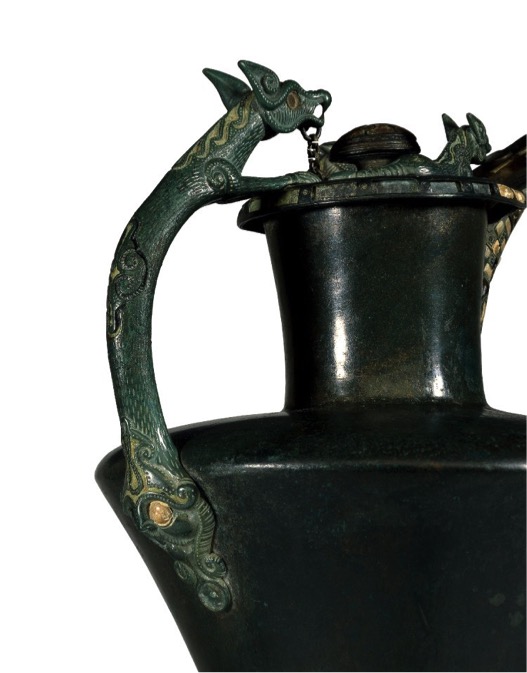
Australian archaeologist Vincent Megaw describes the flagons as “great masterpieces” that “combine most of the key features of early Celtic Art” (Megaw 76). What draws the most attention are the animals on top. Simon James says that the animals “appear to be a pack of dogs chasing a duck” (James, 31). When wine is poured from the flagon, it runs down the spout and under the duck, which gives the illusion that the duck is swimming. The animals allude to hunting, which James describes as a favorite pursuit of the nobility. The inclusion of the duck itself is a very native element of the design, not found in pieces from other cultures.
I personally would describe the flagons as endlessly intricate. When I first saw them, I was amazed by how well preserved they were. But as I looked closer and learned more, I began to notice the intricacies of the flagons: the interlacing, geometric pattern at the base, the coral inlays under the spout. What strikes me the most about these pieces is the intricate animals set on the top of the flagons. Both flagons have the same animals decorating the top, including the little duck. While clearly recognizable as certain animals, they appear to have a somewhat fantastical quality to them. For example, the dogs that form the handles of the flagons have miniature swirls decorating their bodies. Additionally, the dogs’ torsos have been drastically elongated in order to form the handle, but instead of the base of the handle being the rear end of the dog, the base is that of a human face. Could this dissolution from animal to human be a statement of how man is connected to animals? Or is this a way for the artist to honor the Celtic dignitary the flagons were made for?
Like most people, I wish I knew more about its discovery. Since it was dug up illegally and without help from trained professionals, I wonder if there were any other artifacts that were buried with these flagons. Additionally, I would love to know more about how the Celtic people who made these got the red glass from Asia Minor and the coral from the Mediterranean. Were there other Celts in these areas that they traded with or did they have business relations with other peoples?
Works Cited
“The Basse-Yutz Flagons.” The British Museum, 2017, www.britishmuseum.org/research/collection_online/collection_object_details.aspx?objectId=827612&partId=1.
James, Simon. The World of the Celts. Thames and Hudson, 2005.
Megaw, Ruth and Vincent, Celtic Art: From Its Beginnings to the Book of Kells, 1989 (2001 2nd edn), Thames & Hudson
Publisher:
The British Museum
Date:
Mid 5th century BCE
Format:
Bronze, 40 cm