Hochdorf Bronze Couch
Files
Dublin Core
Title:
Hochdorf Bronze Couch
Description:
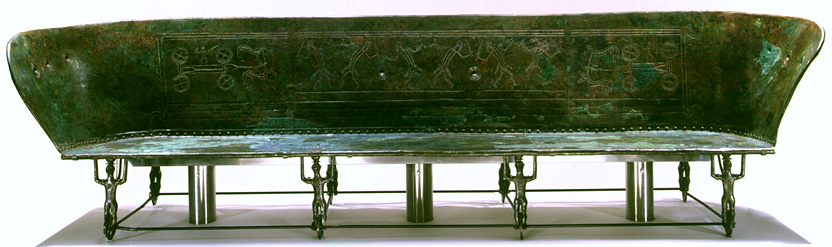
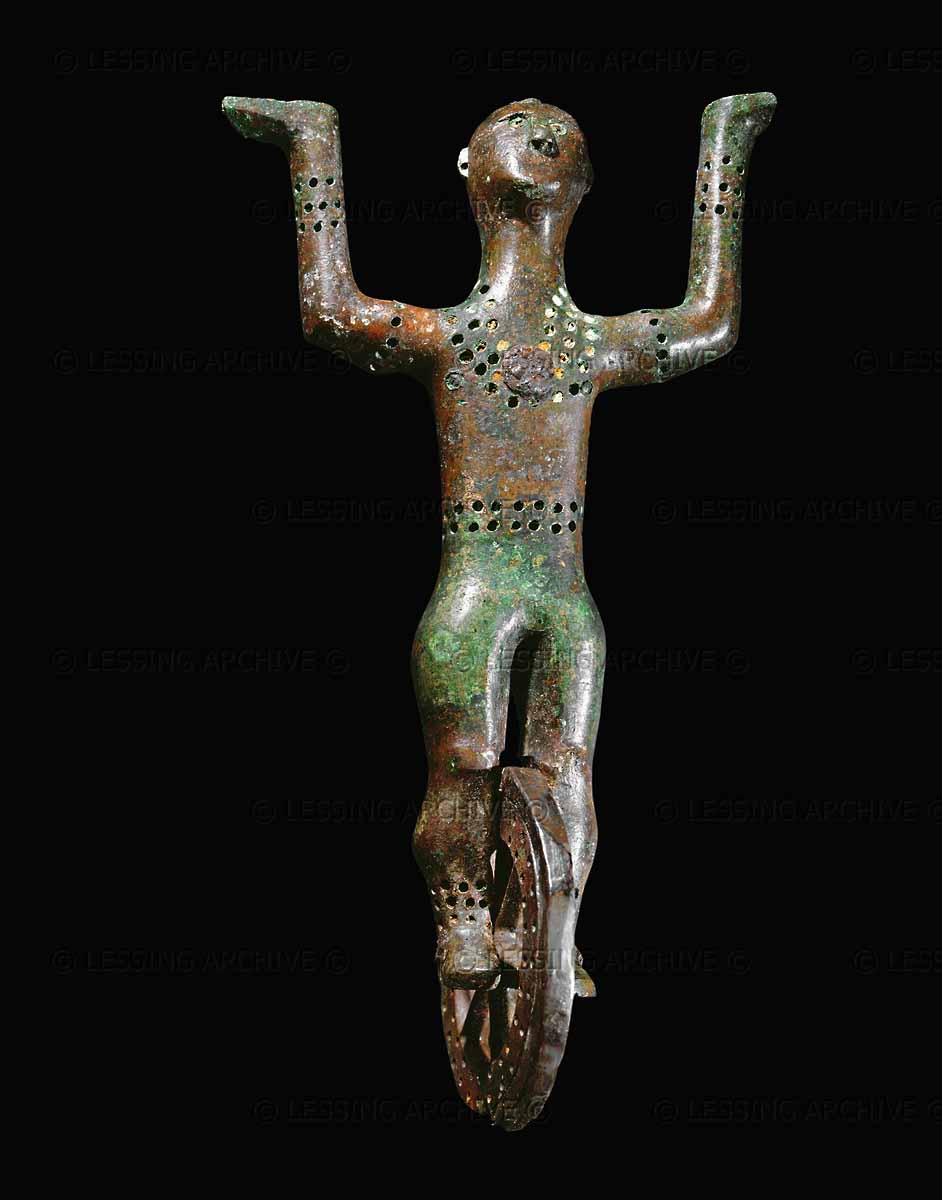
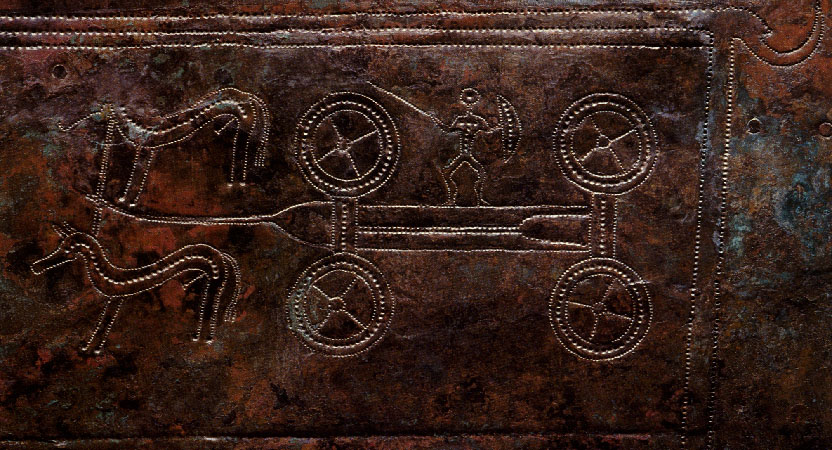
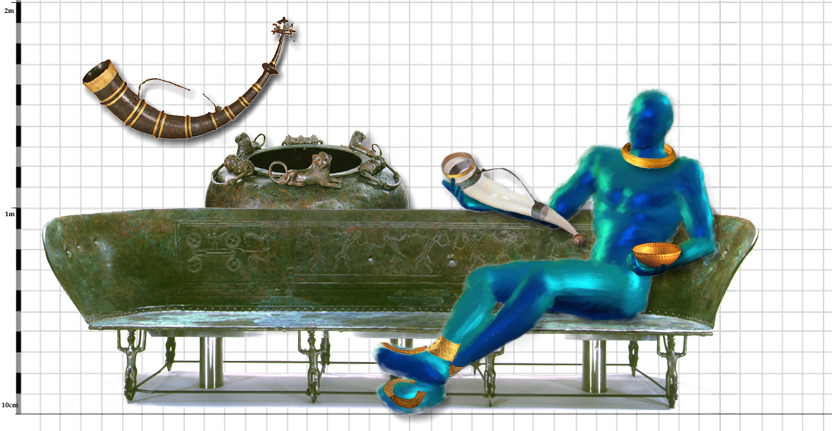
The Hochdorf Bronze couch is an approximately 10-foot-long couch that dates back to the late Hallstatt to early La Tène period (530-400 BC). The bronze front and back of the couch are covered with incised scenes. The scenes consist of different combinations of wagons, horses, warriors, and dancing individuals. These scenes are significant as they confirm and emphasize the aspects of Celtic society that are obviously highly valued. Furthermore, there are 8 supporting legs of bronze and iron, and each leg is a person, 14 inches tall, riding a functional wheel. Though only the bronze work is preserved, the couch would have been adorned with a plethora of cushions and furs (University of Texas at Austin). Unfortunately, while the fabric had been preserved by bacteria-killing oxides produced by the metal, the fabric disintegrated when the tomb was opened and exposed to air (UNC - Chapel Hill).
The burial tomb, in which the couch was found, was first discovered in Horchdorf, Germany in 1968 by Renate Leibfried, a volunteer representative of the State Antiquities and Monuments Office. After coming across stone fragments numerous times when plowing a field, she notified her office. Dr. Jörg Biel began the excavation after a decade long delay, due to high costs, in 1978; however, the delay allowed the dig to be carried out using the most modern archeological methods of the time (Keltenmuseum Hochdorf/Enz). Unlike many other Celtic burial tombs, the Hochdorf tomb remained undisturbed for so long because the original mound (20 feet tall and 197 yards wide) had shrunk to only 3 feet tall (UNC - Chapel Hill). The recovered artifacts are now on display at the Keltenmuseum (or The Celtic Museum in English), not far from the mound itself.
There were many other objects found with the couch. The wagon, gold shoes, daggers, drinking horns, and cauldron are evidence that the tomb was a princely grave for a “chieftain.” The skeleton found in the grave was lying on the couch. The man was 6 feet tall, incredibly tall for the iron age, and 40 years old at time of his death. While the couch was used in the burial, it is unclear what purpose, if any, it served before the man’s death. A theory is that the chieftain used it as furniture throughout his life. Celts are often portrayed as banqueting on the ground, thus any elevation is symbolic of that person’s leadership (University of Texas at Austin). This, however, is only speculation and can neither be confirmed nor denied.
Personally, I see the couch as a tribute to the greatest of a fallen chieftain. A man of such physical stature would have been high revered in the Celtic culture that values strength and appearance above almost all else. Thus, the couch is just one way to honor his leadership. I find the carvings especially revealing as the inscriptions are of horses and warriors, which are very important to the Celts. Also, the legs with wheels are truly impressive and unique. It speaks to the level of craftsmanship of the Celts. I wish I knew if the couch served a purpose before being placed inside the tomb. Was the couch used as everyday furniture? Or was it constructed for the sole purpose of the burial? I believe that an answer to these questions would provide insight into the lifestyle and customs of the ancient Celtic people.
Works Cited
“The Discovery.” Keltenmuseum Hochdorf/Enz, Keltenmuseum Hochdorf/Enz, keltenmuseum.de/English/The-Celtic-Museum/The-Discovery/.
“Hallstatt Elite Burials.” Celts, UNC - Chapel Hill, www.unc.edu/celtic/topics/burial/burial.html.
“Hochdorf Bronze Couch.” Iron Age "Celts", University of Texas at Austin, 2009, www.laits.utexas.edu/ironagecelts/hochdorf3.php.
Publisher:
Keltenmuseum Hochdorf/Enz
"The Celtic Museum"
Date:
530-400 BC
Late Hallstatt to early La Tène period
Format:
Bronze
3 meters long (approx. 10 feet)
35 centimeters tall legs - 8 legs total (approx. 14 inches)